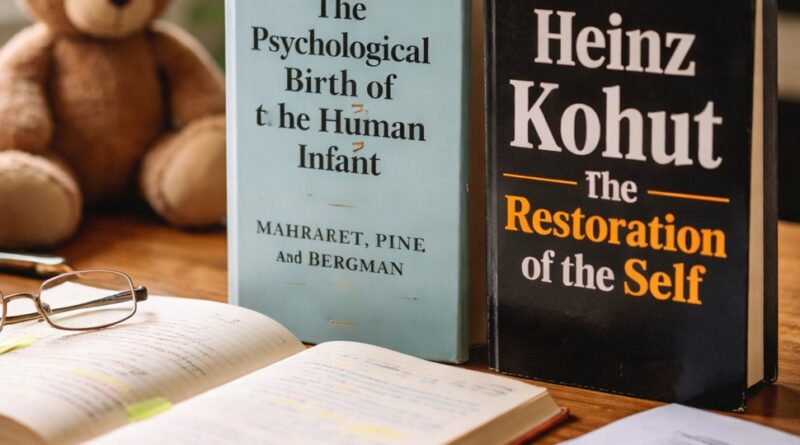
Contrasting Mahler and Kohut in Infant Research Theories
The theories of Margaret Mahler and Heinz Kohut offer distinct perspectives in the realm of infant development and psychoanalysis. Examining these two approaches provides insight into the complexities of early psychological theories and their implications. Each has contributed significantly to our understanding of infant development, yet they diverge in key areas that are critical to grasping the nuances of early psychological processes.
Margaret Mahler’s separation-individuation theory posits that the development of a child’s identity occurs in stages, beginning at birth and culminating in the achievement of individual autonomy. Mahler emphasized the importance of early mother-infant interactions, suggesting that these bonds are crucial for the differentiation of self from the mother. Her theory is structured around several phases, starting with normal symbiosis and progressing through separation, individuation, and consolidation. This framework highlights how infants gradually develop a sense of self that is distinct from others.
In contrast, Heinz Kohut introduced the concept of self-psychology. This theory shifts the focus toward the formation and maintenance of self-cohesion and self-esteem. Kohut emphasized the role of empathic attunement and the influence of caregivers in shaping an infant’s self-image. His concepts of mirroring and idealizing transference underline the significance of nurturing environments where the infant’s emotional experiences are validated and supported.

The key distinction between Mahler and Kohut lies in their perspectives on the development of the self. While Mahler concentrates on the physical and psychological separation from the mother, Kohut centers on the continuity of self-experience and the importance of empathic relationships. Both theories underscore the importance of early experiences, but they offer differing pathways toward psychological maturity.
Mahler’s separation-individuation phases highlight potential disruptions that can arise during critical developmental stages. For instance, if a child experiences difficulties in the differentiation phase, it may result in challenges with autonomy and identity formation later in life. This perspective underscores the importance of stability and support during early childhood to facilitate successful individuation.
Meanwhile, Kohut’s self-psychology perspective suggests that disruptions in empathic attunement can lead to fragmented self-states and narcissistic vulnerabilities. His work highlights the necessity for responsive and validating caregiving to foster a cohesive and resilient sense of self. By focusing on the continuity of self-object experiences, Kohut provides a framework for understanding how early relational dynamics impact emotional development.
Although both Mahler and Kohut are grounded in psychoanalytic tradition, they illuminate different aspects of the infant-caregiver relationship. Mahler’s emphasis on physical and psychological separation is balanced by Kohut’s focus on emotional attunement and validation. Their theories together present a comprehensive view of how infants negotiate the complexities of early relational experiences.
From an applied perspective, these insights have informed therapeutic practices and early childhood interventions. Understanding the distinct paths outlined by Mahler and Kohut allows caregivers and professionals to better support infants in achieving healthy developmental outcomes. Strategies derived from Mahler’s work might focus on fostering independence, while those from Kohut’s model emphasize the cultivation of empathic connections.
In conclusion, the contrasting views of Mahler and Kohut offer invaluable insights into infant development. Each provides a unique lens through which to understand the intricate processes underlying identity formation and self-cohesion. Integrating these perspectives enriches our approach to nurturing the emotional and psychological well-being of children from infancy onward.